
Aquafaba meringues
White meringues, crisp right to the centre, made with chickpea cooking water and sugar. Nothing else.
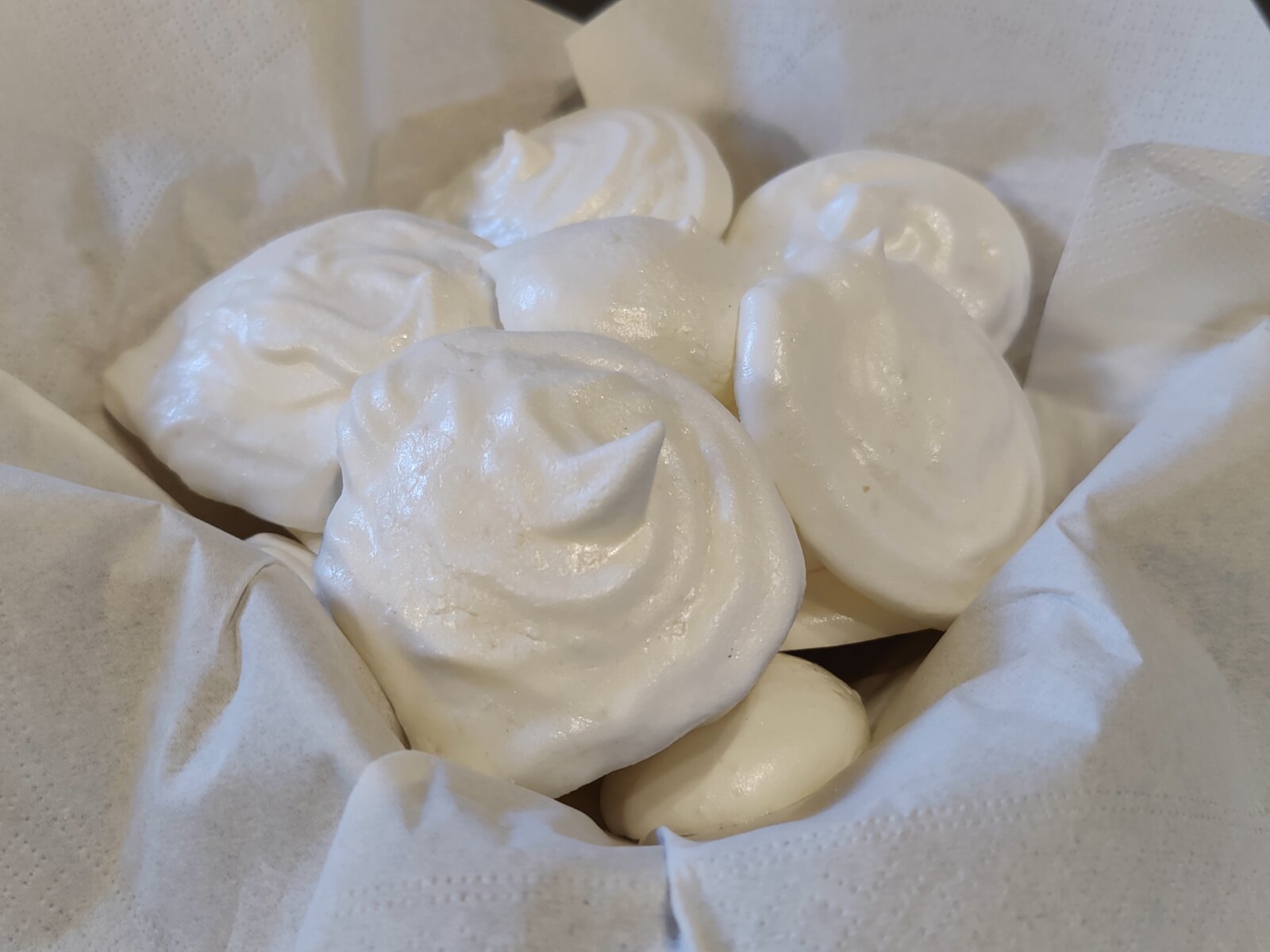
White, light and crisp right to the centre. They’re the base of our Mont Blanc, but they’re lovely on their own too.
Ingredients
- 100 g aquafaba (at room temperature)
- 110 g granulated sugar (to be blitzed fine just before using)
Method
Note. Aquafaba is the cooking water from chickpeas. For meringues, what matters is how concentrated it is: if it’s too thin, it won’t whip well.
This is how we make it: dried chickpeas soaked overnight, then into a pressure cooker with fresh water at 2.5 times their weight, no salt. When it starts to whistle, turn it down to the lowest heat on the small burner and cook for 30 minutes, then let it cool without opening the valve, so no steam escapes. Strain and weigh.
The chickpeas from our hummus give you enough for the 100 g in this recipe: 105 g of dried chickpeas and about 260 g of water (about two thirds of it is left after cooking). Canned aquafaba works too, but its concentration varies from brand to brand.
-
The sugar. Blitz the sugar (110 g) for 2 minutes, pause for a minute to let the blade cool, then blitz for another 2 minutes, until it’s almost as fine as icing sugar. The finer it is, the faster it dissolves into the foam. Better not to use shop-bought icing sugar: it usually contains starch, which holds on to moisture and leaves the centre soft.
-
The aquafaba on its own. Whip the aquafaba (100 g) in a stand mixer on high speed for about 10 minutes. Use it at room temperature, not cold: unlike egg white, cold aquafaba whips just the same but then weeps more liquid. It won’t get very stiff, and that’s normal: the rest of the structure comes with the sugar. But it still has to hold peaks: when you lift the whisk, the foam should stand up and not drip. If it drips, keep whipping before adding the sugar, because sugar won’t rescue a foam that can’t stand up.
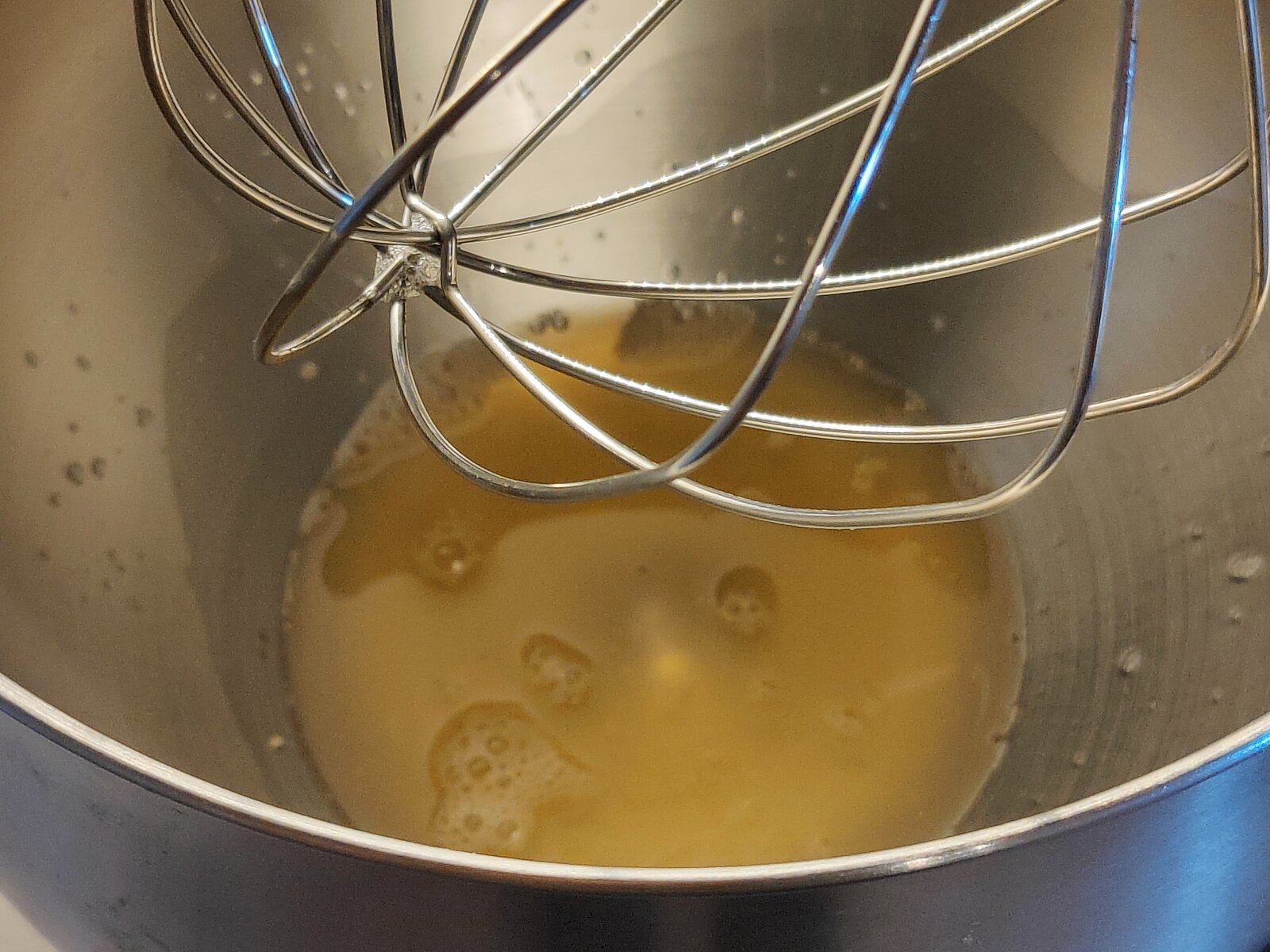
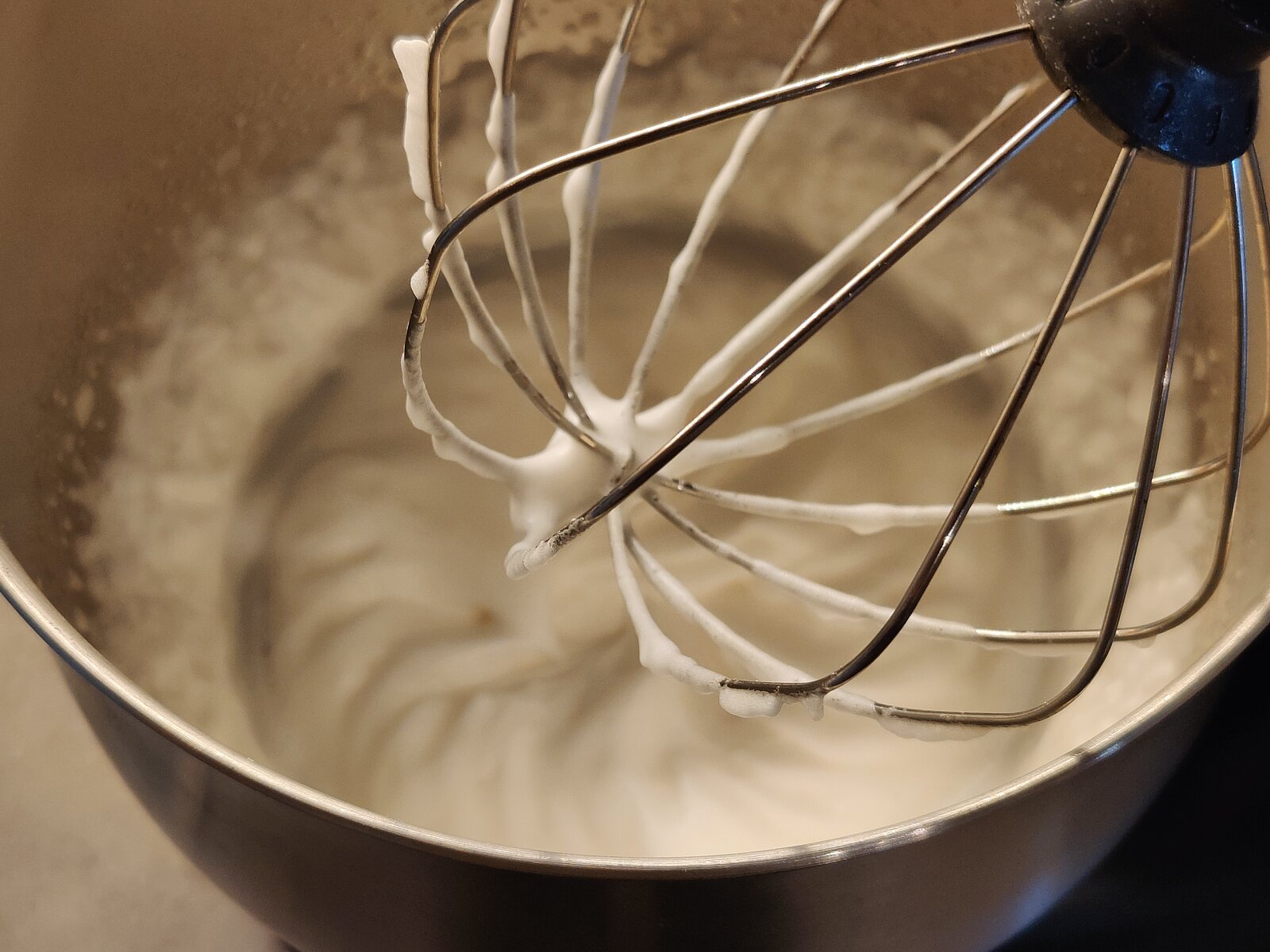
-
The sugar, a little at a time. Still on high speed, add the sugar a heaped teaspoon about every 15 seconds. If you pour it all in at once, it doesn’t have time to dissolve, and the foam gets heavy.
-
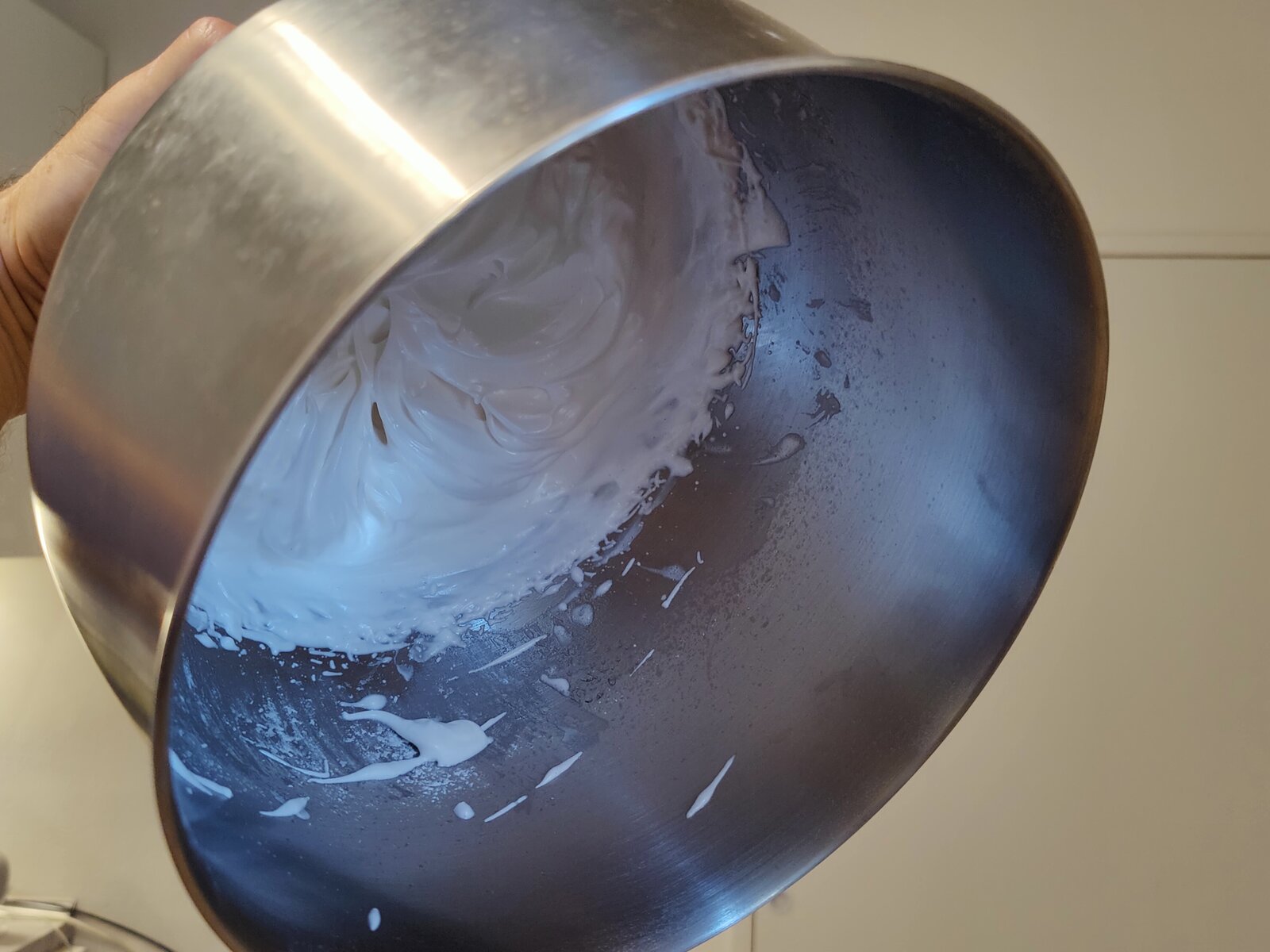
Keep whipping. Carry on for about another 10 minutes, until the mixture is glossy and holds peaks that stand up on their own, and doesn’t slide when you turn the bowl upside down. Rub a little between your fingers: if you can still feel grains, keep whipping. Undissolved sugar turns to syrup in the oven.
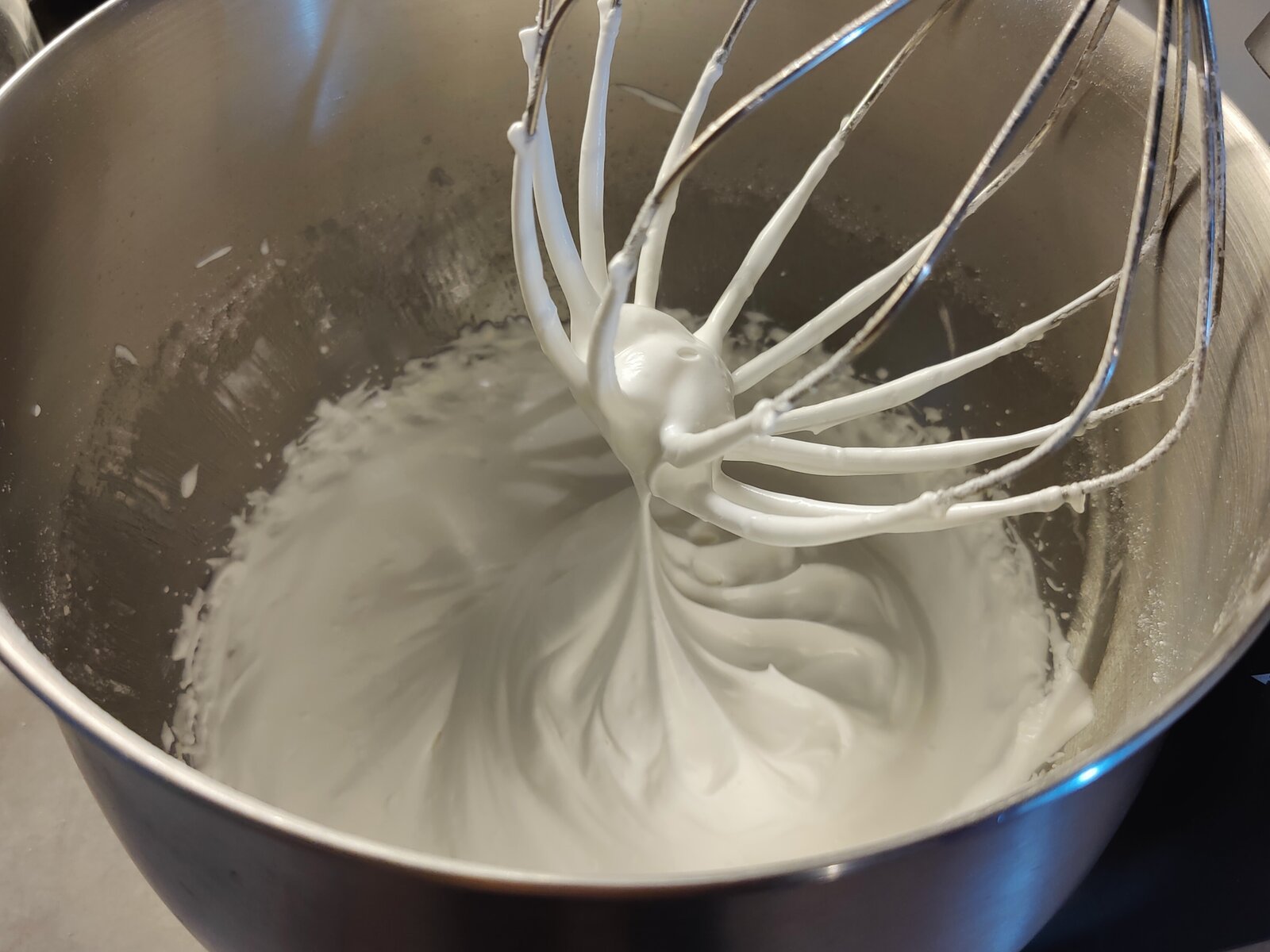
-
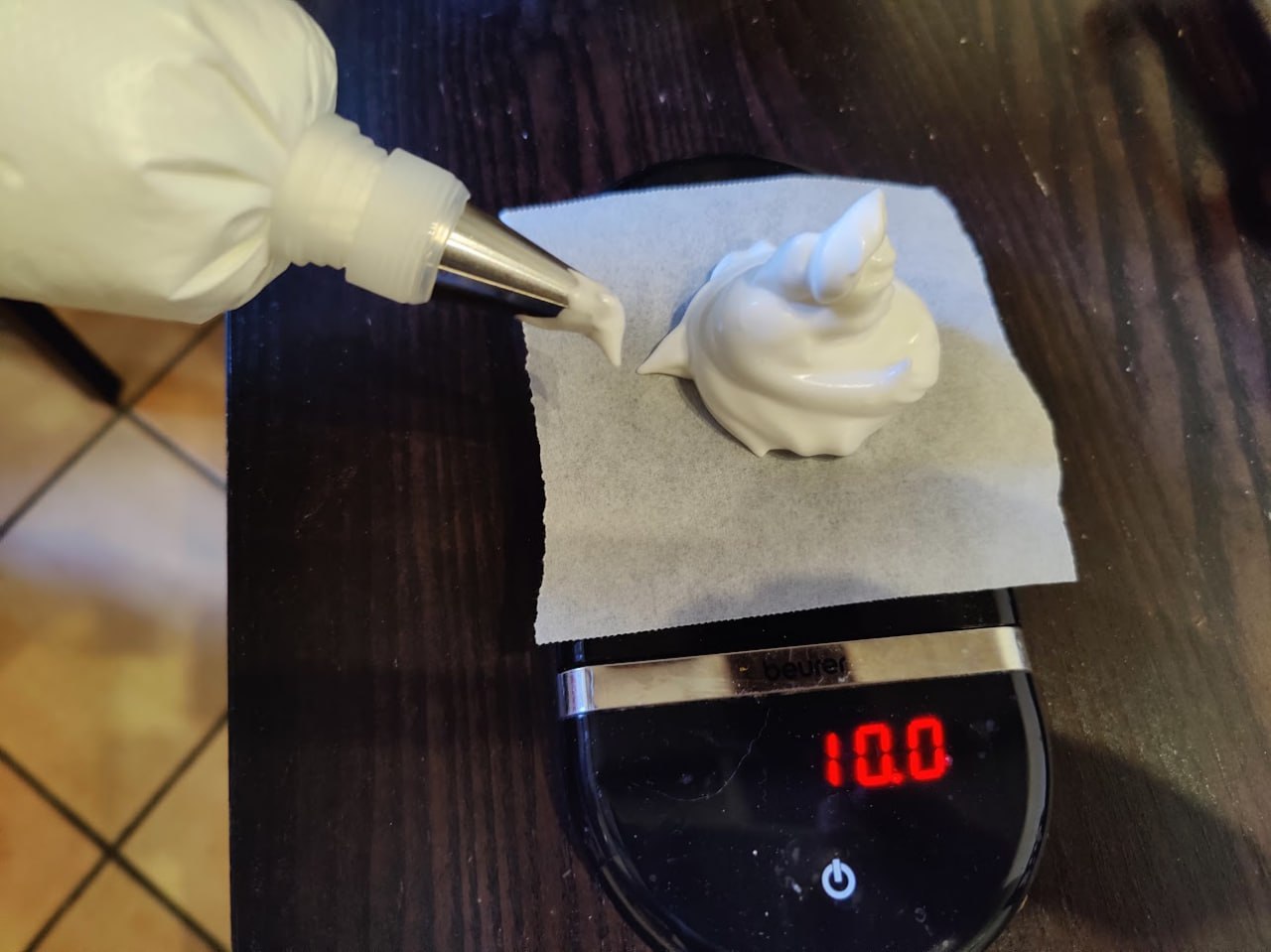
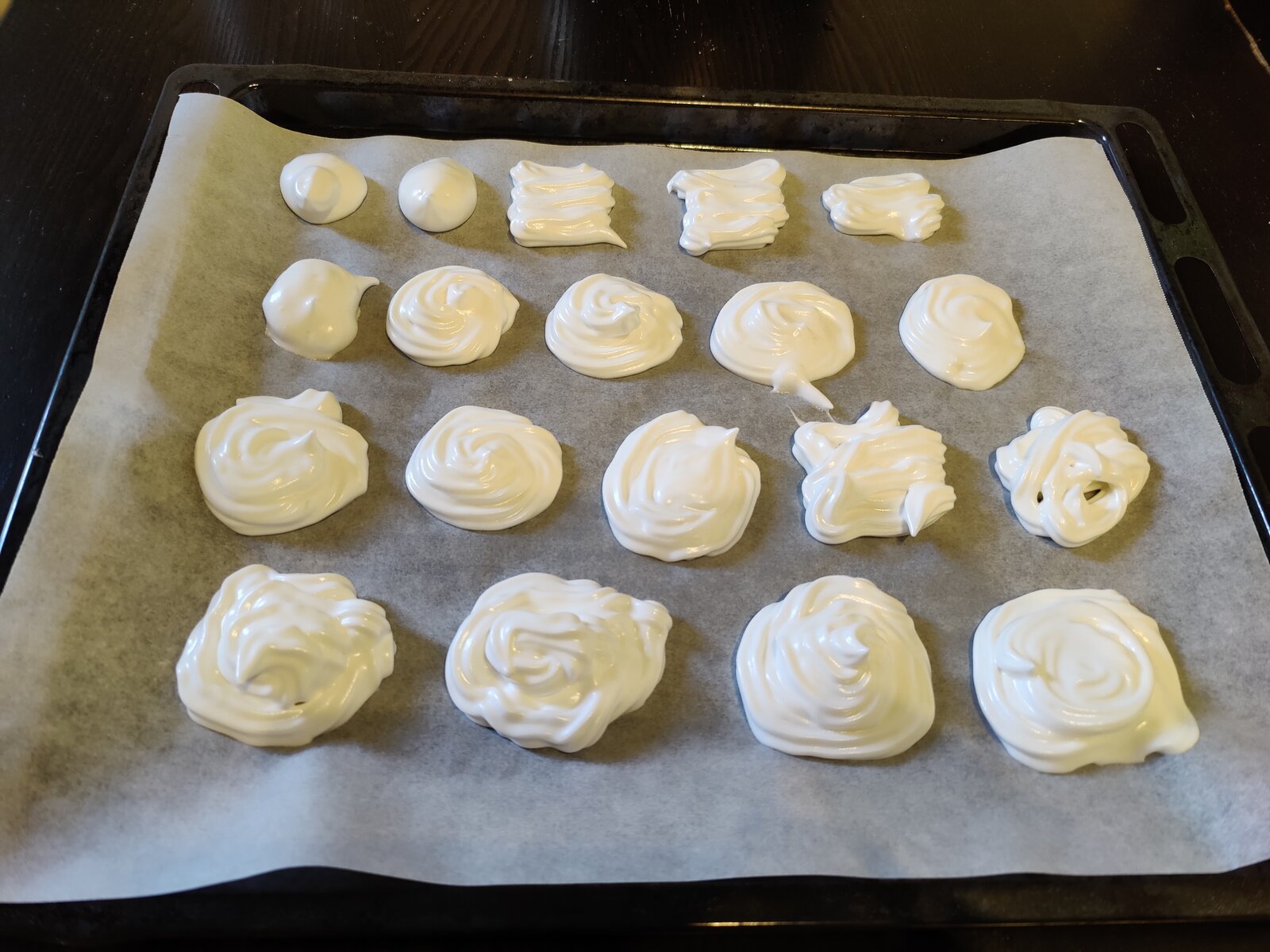
Shape. With two teaspoons or a piping bag, make small dollops of 8–9 g each on baking paper, on a tray. Small, because the centre of a big dollop takes much, much longer to dry.
-
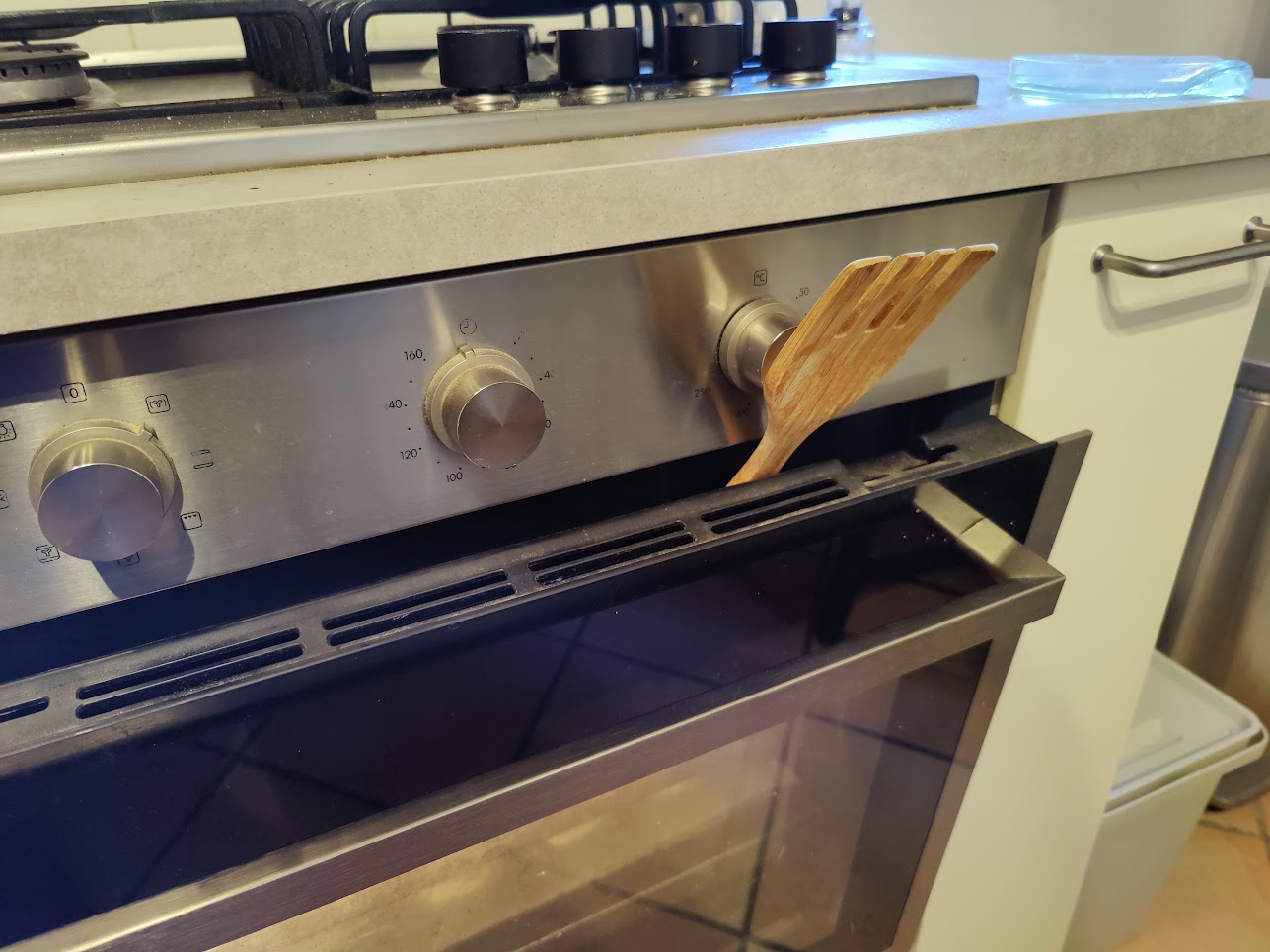
Oven. Fan oven at 80 °C. If you can, check with an oven thermometer: the dial can be off by 10–20 degrees. Ovens cycle, so it’s normal for the temperature to drop to 65 °C and then climb to 100 °C: what matters is that it stays in that range. Hotter, they dry faster, but they turn yellow. After an hour, open the door and put the handle of a wooden spoon between the door and the oven, so it stays open a couple of centimetres: the moisture escapes and the meringues dry better.
-
The test. After 3 hours, cut the baking paper around one meringue and take it out. While hot it’s always soft and stuck to the paper, even when it’s done, because sugar only hardens as it cools. Let it cool completely, then peel it off and break it: it should be white and crisp right to the centre. If it isn’t, leave them in and test again every half hour.
-
Cool. Take them out and let them cool on the tray. Only peel them off the paper once they’re cold.
Note. Many recipes add an acid (cream of tartar, lemon juice, citric acid) to make aquafaba whip faster. You don’t need it here: with a few more minutes of whisking it whips perfectly well on its own, and the taste stays clean.
KeepsIn an airtight jar, away from humidity.